

For decades, the core of occupational therapy has remained the same: helping people master the activities of daily living (ADLs) that grant them independence. However, as we celebrate Occupational Therapy Month, we have to acknowledge that “daily life” has fundamentally changed. In 2026, a patient’s independence isn’t just measured by their ability to button a shirt or use a spoon; it is measured by their ability to navigate a digital world.
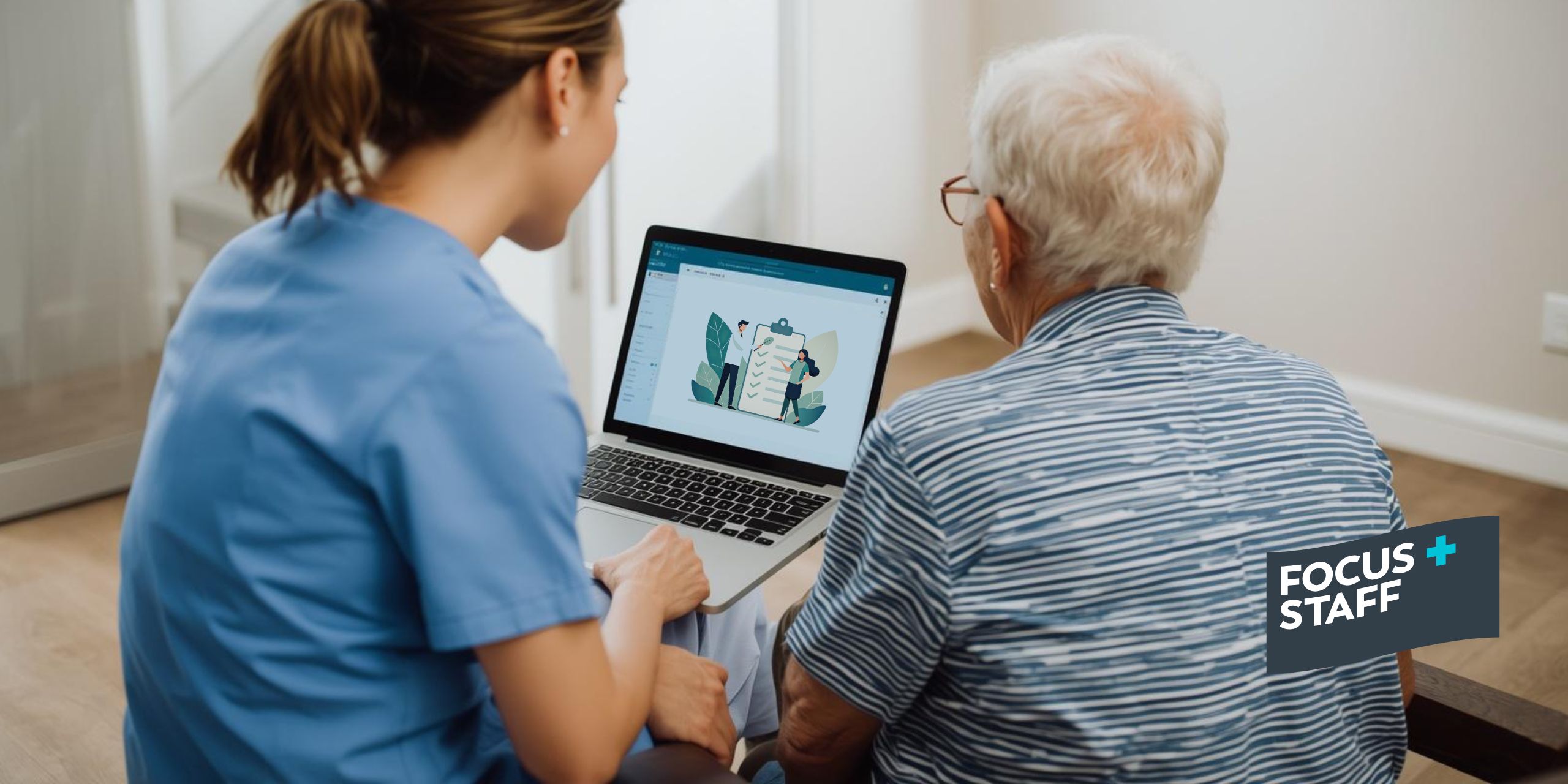
At Focus Staff, we are seeing a surge in demand for clinicians who can bridge the gap between traditional rehabilitation and the “Digital ADL.” Here is why this frontier is the next big shift for the profession.
What are Digital ADLs?
While standard ADLs focus on basic physical needs, Digital ADLs encompass the virtual tasks required to function in modern society. For an OT, this means assessing and treating a patient’s ability to interact with technology to maintain their quality of life. Key areas include:
- Digital Health Management: Navigating patient portals, setting medication reminders on a smartphone, or using wearable health monitors.
- Virtual Social Participation: Using video call platforms or social media to prevent the isolation often associated with long-term recovery.
- Home Automation for Accessibility: Programming smart home hubs (like Alexa or Google Home) to control lighting, temperature, and security when physical mobility is limited.
- Digital Ergonomics: Adapting workstations for the “remote work” era to prevent repetitive strain or postural issues.
The Modern OT Toolkit: High-Tech Interventions
To address these needs, OTs are moving beyond the reaches of the standard clinical gym. Resourceful OTs are now integrating advanced tools to help patients reclaim their digital lives.
Assistive Technology and App Integration
Clinicians are now “prescribing” specific apps designed for cognitive load management or fine motor practice. For patients with tremors or limited dexterity, OTs are identifying the best assistive technology solutions, such as eye-tracking software or adaptive styluses, to ensure the digital world remains accessible.
Cognitive Load and Screen Hygiene
For patients recovering from a Traumatic Brain Injury (TBI) or stroke, the sensory input of a smartphone can be overwhelming. Modern OT interventions now include “digital pacing” strategies, teaching patients how to manage screen time and blue light exposure to prevent neuro-fatigue.
Why Tech-Fluency is a Travel OT Superpower
If you are considering a career in travel occupational therapy, your “digital literacy” is one of your most marketable assets. Every facility you visit will have a different tech ecosystem, from their Electronic Medical Record (EMR) systems to their specialized robotic rehab equipment.
When you can walk into a new assignment and immediately understand how to integrate a patient’s personal technology into their care plan, you aren’t just a therapist; you are a vital problem-solver. This versatility is exactly what helps travel OTs secure top-tier assignments in cutting-edge trauma centers and specialty clinics.
Moving the Needle this OT Month
Occupational therapy has always been about adaptation. As our world becomes more tech-saturated, the “magic” of the OT lies in making sure no patient is left behind in the analog past.
Whether you are helping a senior learn to FaceTime their grandkids or showing a professional how to use voice-to-text software after a hand injury, you are proving that OT is the most forward-thinking profession in healthcare.
Are you ready to bring your modern OT skills to a new facility?
At Focus Staff, we connect talented OTs with assignments that challenge their clinical skills and reward their expertise.